
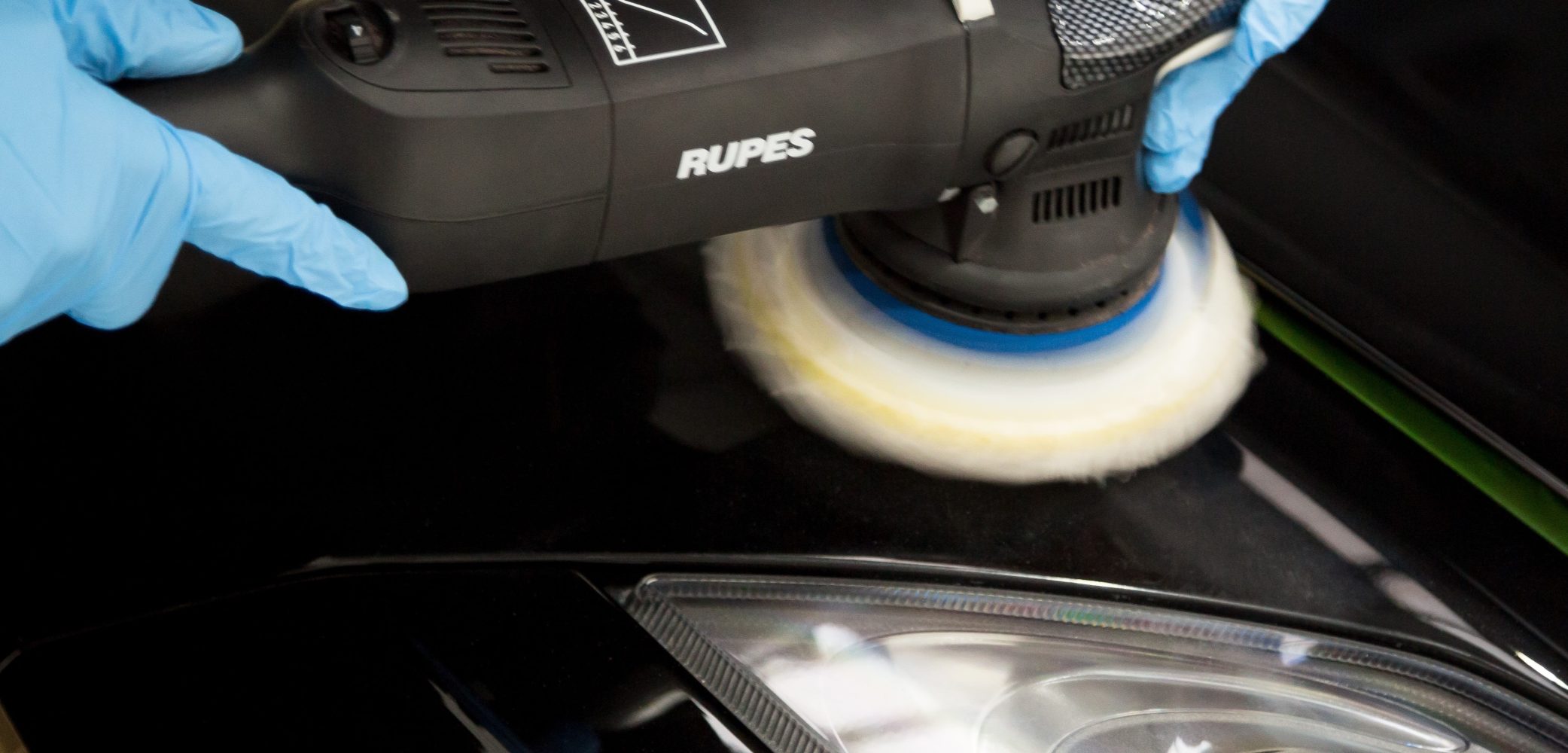
Paint correction is one of the most effective ways to restore the appearance of your vehicle’s paint. It can reduce swirl marks, improve gloss, bring back clarity, and make the finish look sharper, cleaner, and more refined.
What Is Paint Correction?
Paint correction is the professional process of polishing a vehicle’s clear coat to reduce visible imperfections. Using specialized machines, pads, compounds, and polishes, a detailer carefully refines the paint surface to improve the way it reflects light.
Paint correction can help reduce the appearance of:
- Swirl marks
- Light scratches
- Wash marks
- Haze
- Oxidation
- Water spots
- Towel marks
- Buffer trails
- Light etching
- Dull or cloudy paint
The goal is to safely improve the paint’s appearance while preserving the integrity of the clear coat.
Why Does Paint Start Looking Dull?
Most modern vehicles have a layer of clear coat over the color coat. This clear coat is what gives the paint its shine and depth. Over time, that clear coat can become marked up by everyday use.
Common causes include automatic car washes, improper hand washing, dirty towels, road grime, salt, hard water, tree sap, bird droppings, UV exposure, and poor previous detailing.
When the clear coat is covered in fine defects, light scatters instead of reflecting cleanly. That is why the vehicle can look dull, faded, or hazy even when it is freshly washed.
What Are Swirl Marks?
Swirl marks are fine scratches in the clear coat that often appear in circular patterns under sunlight or bright lighting. They are especially noticeable on black, dark blue, red, and other darker paint colors.
Swirl marks are usually caused by improper washing and drying methods. Automatic brushes, dirty towels, dry wiping, and rushed cleaning can all leave tiny marks behind.
Paint correction helps reduce these marks, allowing the paint to reflect light more evenly and appear glossier.
Paint Correction vs. Wax
Wax can add shine and temporary protection, but it does not truly correct paint defects. In some cases, wax may hide light imperfections for a short time, but once it wears away, the swirl marks and haze are still there.
Paint correction is different. It improves the actual surface of the clear coat through polishing.
A simple way to think about it:
Wax adds temporary shine. Paint correction restores clarity.
For the best long-term results, paint correction is often followed by a protective product such as a sealant or ceramic coating.
Paint Correction vs. Polishing
The terms paint correction and polishing are often used together, but they are not exactly the same.
Polishing is the process used to refine the paint. Paint correction is the overall service focused on reducing defects and improving the finish.
A light polish may improve gloss and remove minor haze. A more involved paint correction may require multiple steps to reduce heavier swirl marks, scratches, oxidation, or water spot damage.
One-Step Paint Correction
A one-step paint correction is a polishing service designed to improve gloss and reduce lighter defects in one polishing stage.
This is a good option for vehicles with light swirl marks, mild haze, or paint that simply needs a refresh. It can make a noticeable difference without the time and cost of a more intensive correction.
A one-step correction is often a strong choice for daily drivers or vehicles that need a cleaner, glossier appearance before protection is applied.
Two-Step Paint Correction
A two-step paint correction is more intensive. It typically includes a first stage to correct heavier imperfections and a second stage to refine the finish and increase gloss.
This is better for vehicles with more noticeable swirl marks, scratches, oxidation, water spots, or neglected paint.
Two-step correction takes more time, but it can create a much more dramatic improvement, especially on darker vehicles or cars where the owner wants a higher-level finish.
What Paint Correction Cannot Fix
Paint correction can make a major difference, but it has limits. It cannot fix every type of paint damage.
Paint correction may not fully remove:
- Deep scratches through the clear coat
- Rock chips
- Peeling paint
- Failing clear coat
- Rust
- Cracked paint
- Severe etching
- Poor body work
- Damage under wraps or paint protection film
A professional detailer must balance improvement with paint safety. The goal is not to remove as much clear coat as possible. The goal is to safely improve the finish while protecting the long-term health of the paint.
Why Paint Correction Is Good for Your Vehicle
Paint correction is valuable because it improves the appearance of the paint instead of simply covering up defects. When done properly, it can make a vehicle look cleaner, newer, and better maintained.
The biggest benefits include:
Restored Gloss
When swirl marks and haze are reduced, the paint reflects light more clearly. This creates a deeper, sharper shine.
Better Clarity
Paint correction can make the color look richer and more vibrant. Metallic paint may appear more defined, and reflections can look cleaner.
Improved Vehicle Appearance
A corrected finish can dramatically improve the overall look of the vehicle, especially if the paint previously looked dull, cloudy, or neglected.
Better Prep for Protection
Paint correction creates a better surface for wax, sealant, or ceramic coating. Protection products look better and perform better when applied to clean, polished paint.
Increased Pride of Ownership
There is a big difference between a vehicle that is simply clean and one that looks truly polished. Paint correction helps bring back that sharp, well-cared-for appearance.
Is Paint Correction Worth It?
Paint correction is worth it if your vehicle has visible swirl marks, dull paint, haze, oxidation, or light scratches that bother you.
It is especially worth considering if:
- Your car still looks dull after washing
- You see swirl marks in direct sunlight
- Your paint lacks depth or gloss
- You drive a black or dark-colored vehicle
- You are preparing for ceramic coating
- You want your vehicle to look newer and cleaner
- You are getting ready to sell or trade in your vehicle
- You want a higher-level exterior detail
For many drivers, paint correction is one of the most noticeable upgrades in professional detailing.
Paint Correction Before Ceramic Coating
Ceramic coating protects the paint, but it does not magically remove swirl marks, haze, or scratches. If a coating is applied over imperfect paint, those imperfections may still be visible underneath.
That is why paint correction is often recommended before ceramic coating. It helps improve the paint first, so the coating can lock in a cleaner, glossier, better-looking finish.
The better the prep, the better the final result.
Professional Paint Correction in North-Central New Jersey
At Top Hat Mobile Detailing, we provide professional mobile detailing services throughout North-Central New Jersey and surrounding areas, including paint correction, polishing, exterior detailing, paint decontamination, ceramic coating prep, and long-term paint protection.
Whether your vehicle needs a one-step polish to restore gloss or a more involved correction to reduce swirl marks and haze, we bring premium auto care directly to your home or workplace.
If your paint looks dull, scratched, or tired, paint correction may be the service that brings it back to life.
Book your detailing session with Top Hat Mobile Detailing today and experience premium auto care — delivered to your doorstep