
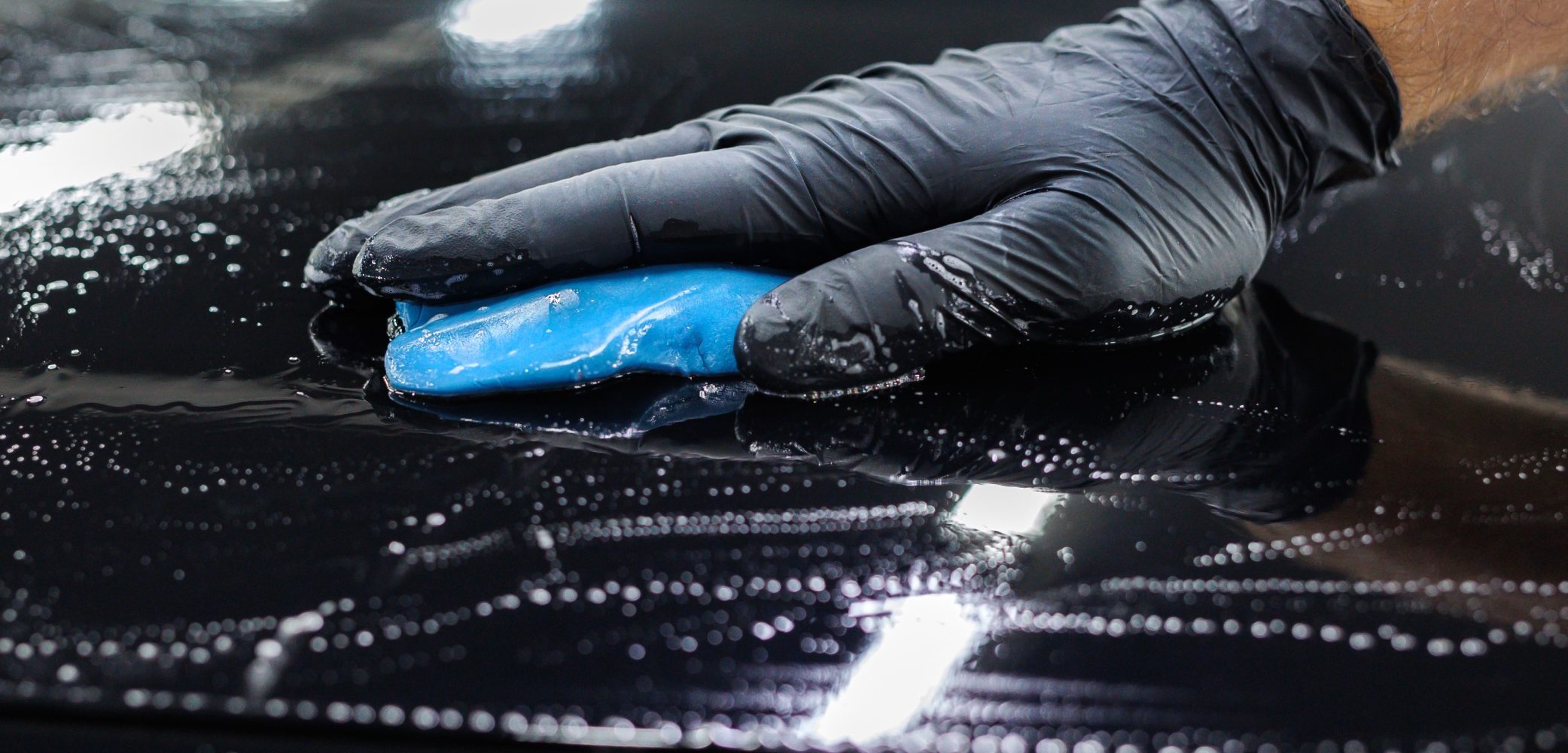
Claying a car is one of the most important steps in professional exterior detailing. It helps remove contaminants that a normal car wash cannot take off, leaving the paint smoother, cleaner, and better prepared for wax, sealant, polish, or ceramic coating.
For drivers searching for car detailing near me, mobile detailing NJ, or paint decontamination, understanding what a clay bar does can help you see why professional detailing goes far beyond a basic wash.
What Is a Clay Bar?
A clay bar is a detailing tool used to remove bonded contaminants from your vehicle’s paint, glass, and sometimes other exterior surfaces. It is not regular clay. It is a specially designed detailing material that safely grabs and lifts contamination from the surface when used properly with lubrication.
During a clay bar treatment, the detailer glides the clay across the paint with a proper lubricant. As it moves across the surface, it pulls away tiny particles that are stuck to the clear coat.
The result is paint that feels much smoother and cleaner.
What Does Claying a Car Remove?
A regular car wash removes loose dirt from the surface. But some contamination bonds to the paint and does not come off with soap and water.
A clay bar can help remove:
- Road film
- Brake dust particles
- Industrial fallout
- Tree sap residue
- Tar
- Pollen buildup
- Hard water mineral deposits
- Rail dust
- Embedded grime from daily driving
These contaminants can make your paint feel rough and look dull, even after the vehicle has been washed.
How Can You Tell If Your Car Needs a Clay Bar Treatment?
One of the easiest ways to tell is by touch.
After washing the car, gently run your hand over the paint. If the surface feels smooth like glass, it may not need claying. But if the paint feels rough, bumpy, gritty, or textured, there is likely bonded contamination on the surface.
Common signs your vehicle may need clay bar treatment include:
- The paint feels rough after washing
- The car still looks dull even when clean
- Water does not glide smoothly off the paint
- Wax or sealant does not seem to last
- The paint has tiny specks or particles stuck to it
- The vehicle is exposed to highway driving, trees, construction dust, or road salt
For many vehicles in New Jersey, especially daily drivers, clay treatment can be very helpful because the paint is constantly exposed to road grime, salt, pollen, brake dust, and environmental fallout.
Why Washing Alone Is Not Enough
A car wash is important, but it only handles surface dirt. It cannot fully remove contaminants that have bonded to the paint.
Think of it this way: washing cleans the top layer, while claying removes what is stuck to the paint.
That is why a vehicle can be freshly washed but still feel rough. The dirt you see may be gone, but the contamination you feel may still be there.
This is one of the biggest differences between a basic car wash and a professional exterior detail.
Why Clay Bar Treatment Is Good for Your Car
Clay bar treatment is beneficial because it helps restore a cleaner, smoother surface. That makes the vehicle look better and also helps future protection work more effectively.
Here are the main benefits:
1. It Makes the Paint Feel Smooth Again
The most noticeable benefit is smoothness. After proper claying, the paint often feels slick and clean instead of rough or gritty.
This is one of the reasons professional detailing feels different from a basic wash. The vehicle does not just look cleaner — it feels cleaner.
2. It Helps Improve Gloss
Contamination can dull the appearance of your paint. When bonded particles sit on the surface, they interfere with how light reflects off the clear coat.
Removing that contamination can help the paint look cleaner, brighter, and glossier. While clay bar treatment does not replace polishing or paint correction, it can improve the overall appearance of the vehicle by removing surface buildup.
3. It Prepares the Paint for Wax, Sealant, or Ceramic Coating
This is one of the most important reasons to clay a vehicle.
Wax, sealants, and ceramic coatings perform best when applied to a clean, properly prepared surface. If contamination is still bonded to the paint, protection may not bond as well or last as long.
Clay bar treatment helps prepare the paint so protective products can sit on the surface more evenly and effectively.
For services like ceramic coating, paint correction, or wash, clay, and seal, proper decontamination is a key step.
4. It Helps Remove Contaminants That Can Damage the Finish
Some contaminants are more than just ugly. Brake dust, industrial fallout, tar, salt residue, and mineral deposits can sit on the paint and contribute to long-term staining, roughness, or deterioration if ignored.
Clay bar treatment helps remove these contaminants before they become a bigger problem.
This is especially important for vehicles driven daily in North-Central New Jersey, where roads, weather, pollen, winter salt, and traffic grime can quickly build up on the exterior.
5. It Makes Future Cleaning Easier
A smooth surface is easier to maintain than a contaminated one. When paint is rough, dirt and grime have more places to cling. When the surface is properly cleaned and protected, future washes can become easier and more effective.
Claying followed by a sealant or ceramic protection can help your vehicle stay cleaner longer and make maintenance washes more efficient.
Does Clay Bar Remove Scratches?
No. A clay bar does not remove scratches, swirl marks, oxidation, or deeper paint defects.
Claying removes bonded contamination from the surface. It does not correct the paint itself.
If your vehicle has swirl marks, haze, dullness, or fine scratches, you may need polishing or paint correction after the clay bar treatment. Claying is often done before polishing because it creates a cleaner surface for the correction process.
Can Clay Bar Damage Paint?
Clay bar treatment is safe when done properly, but it must be performed with the right technique, lubrication, and care.
If clay is used incorrectly, pressed too aggressively, dropped on the ground, or used without enough lubricant, it can cause marring or light marks in the paint. This is one reason many vehicle owners prefer to have clay treatment done by a professional detailer.
At Top Hat Mobile Detailing, paint decontamination is performed carefully as part of a proper exterior detailing process.
How Often Should You Clay Your Car?
How often your vehicle needs clay bar treatment depends on how and where you drive.
A garage-kept weekend car may not need claying often. A daily driver exposed to highways, trees, road salt, rain, pollen, and construction dust may need it more regularly.
As a general rule, many vehicles benefit from clay treatment once or twice a year, especially before applying a fresh sealant, wax, or ceramic coating.
The best way to know is by feel. If the paint feels rough after washing, it may be time for clay bar treatment.
Clay Bar Treatment and Ceramic Coating
If you are considering a ceramic coating, clay bar treatment is often part of the preparation process. Ceramic coatings need clean, properly prepared paint to bond well.
Before applying a coating, the vehicle may need washing, chemical decontamination, clay treatment, polishing, and surface prep. Skipping proper prep can affect the final appearance and durability of the coating.
That is why professional ceramic coating is not just about applying the coating. The preparation is what makes the result look better and last longer.
Clay Bar Treatment vs. Paint Correction
Clay bar treatment and paint correction are often confused, but they are not the same.
Clay bar treatment removes bonded contamination from the surface.
Paint correction removes or reduces defects in the clear coat, such as swirl marks, haze, oxidation, and light scratches.
Many vehicles benefit from both. First, the paint is washed and decontaminated. Then, if needed, the paint is polished or corrected to improve gloss and clarity.
Professional Clay Bar Treatment in North-Central New Jersey
If your vehicle still feels rough after washing or does not look as glossy as it should, a clay bar treatment may be the missing step.
At Top Hat Mobile Detailing, we provide professional mobile car detailing services throughout North-Central New Jersey, including exterior detailing, paint decontamination, clay bar treatment, paint correction, ceramic coatings, interior detailing, and protective maintenance services.
We bring premium auto care directly to your home or workplace, helping your vehicle look cleaner, feel smoother, and stay better protected.
Book your detailing session with Top Hat Mobile Detailing today and experience premium auto care — delivered to your doorstep.