
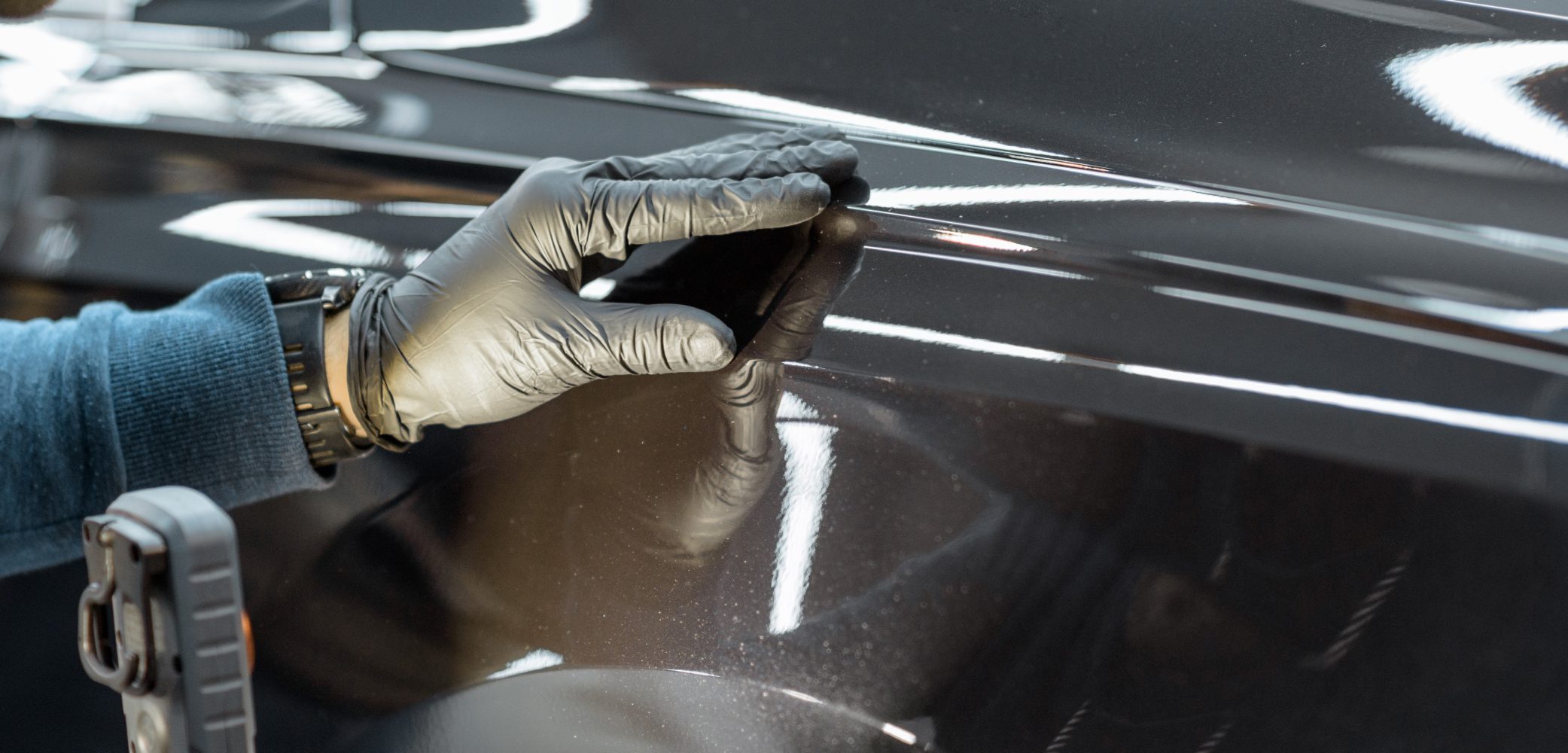
1. The Difference Between Shine and Healthy Paint
A car can look shiny and still have heavily imperfect paint.
Direct sunlight or a strong inspection light may reveal:
- Fine swirl marks
- Random scratches
- Water spotting
- Hazy areas
- Oxidation
- Improper polishing marks
- Etching from bird droppings or environmental contamination
Dark-colored vehicles make these imperfections especially noticeable, but they exist on light colors too—they are simply harder to see.
To most people, a glossy car looks great. A detailer is looking beyond the gloss and evaluating the actual condition of the clear coat.
That distinction matters because cleaning, protecting, polishing, and correcting paint are four different things.
A wax or sealant can make imperfect paint look better, but it does not necessarily remove the defects underneath.
2. Whether Your Paint Protection Is Still Working
Professional detailers pay attention to the way water behaves on the surface.
Does it bead tightly?
Does it sheet away quickly?
Does water seem to cling to certain panels more than others?
That can tell us quite a bit about the condition of an existing wax, sealant, or ceramic coating.
Interestingly, poor water behavior does not always mean the protection is completely gone. Sometimes contamination has accumulated on top of it and is interfering with its performance.
This is particularly common with ceramic-coated vehicles that have gone a long time without a proper maintenance wash or decontamination.
3. The Lower Half of the Car
The top half of a vehicle usually gets most of the attention.
A detailer tends to look lower.
Rocker panels, lower doors, areas behind the wheels, bumpers, and lower quarter panels are constantly exposed to:
- Road spray
- Salt and brine
- Tar
- Grease
- Tire residue
- Brake contamination
- Dirt kicked up from the roadway
In New Jersey, winter driving can make these areas particularly noticeable.
Even when the rest of the vehicle looks clean, the lower panels can tell a very different story.
4. The Wheel Barrels, Not Just the Wheel Faces
Most people judge a wheel by what they can see from standing beside the vehicle.
Detailers look behind the spokes.
The inner wheel barrel can accumulate an enormous amount of brake dust and road contamination. On some vehicles, the face of the wheel may look relatively clean while the inside is coated in dark buildup.
We also look around:
- Lug nuts
- Valve stems
- Brake calipers
- Tight spoke intersections
- Wheel lips
- Tire sidewalls
Those little areas often make the difference between wheels that have simply been washed and wheels that actually look detailed.
5. Brown Tires
A tire can be technically clean and still look brown.
That discoloration can come from road contamination, old dressing, environmental exposure, and compounds within the tire itself migrating toward the surface.
Applying more tire shine over it usually does not solve the problem.
A properly cleaned tire gives dressing a much better surface to bond to and creates a cleaner, more uniform finish.
And sometimes the most professional-looking result isn’t an extremely glossy tire.
A clean satin finish often looks much better.
6. Water Spots on Glass
You may notice water spots only when the sun hits the windshield at the wrong angle.
A detailer will usually spot them immediately.
Minerals left behind after water evaporates can gradually create visible deposits on:
- Windshields
- Side glass
- Mirrors
- Sunroofs
- Paint
- Glossy trim
Fresh mineral deposits may be relatively easy to remove. Older ones can become much more stubborn.
That is one reason simply cleaning the glass sometimes doesn’t make it look completely clear.
The glass may be clean—but still mineral-stained.
7. The Edges Around Emblems and Badges
Take a close look around the letters on your trunk or the emblem on your grille.
Those tiny edges are magnets for buildup.
Dirt, old wax, polish residue, road film, and water deposits can collect around badges and lettering because normal washing doesn’t always reach into those areas.
You may never notice it from five feet away.
Once it’s properly cleaned, however, the entire panel suddenly looks sharper.
That’s detailing in a nutshell: sometimes the biggest visual improvement comes from fixing dozens of very small things.
8. Door Jambs
Door jambs are one of the easiest places to tell how thoroughly a vehicle has been maintained.
They collect:
- Dirt
- Grease
- Water residue
- Road salt
- Leaves
- Dust
- Old cleaning-product residue
Because the doors are closed most of the time, owners often don’t think about them.
But open a freshly detailed car and spotless jambs make an immediate difference.
The same applies to trunk jambs, hatch openings, and fuel-door areas.
9. Weather Stripping and Rubber Seals
Rubber trim slowly changes with age and exposure.
A detailer may notice seals becoming:
- Dry
- Chalky
- Dirty
- Discolored
- Stiff
These pieces don’t attract much attention until they become noticeably faded.
Cleaning and properly caring for rubber and exterior trim can make an older vehicle look significantly fresher without touching the paint at all.
10. The Little Interior Crevices
Everyone sees crumbs on the floor.
Detailers notice the crumbs hiding between the seat and center console.
We notice:
- Seat tracks
- Cupholder edges
- Air vents
- Steering-wheel seams
- Shifter surrounds
- Door-pocket corners
- Seat-belt buckles
- Buttons and switches
- Console gaps
- Stitching
- Pedal areas
Individually, none of these spots seems particularly important.
Collectively, they’re often what makes an interior feel truly clean—or not.
11. The Steering Wheel
The steering wheel is one of the most frequently touched surfaces in the entire vehicle.
Over time, oils from your hands, lotions, dirt, and other residue can build up on the material.
Sometimes a steering wheel that appears shiny isn’t supposed to be shiny at all.
Cleaning can reveal that what looked like a glossy leather finish was actually accumulated grime.
The same thing often happens with shift knobs, armrests, and frequently touched buttons.
12. Whether a Stain Is Actually a Stain
Not every dark spot in carpet or upholstery is the same.
A detailer may look at discoloration and start considering whether it is:
- Surface dirt
- An oil-based stain
- A beverage spill
- Dye transfer
- Salt residue
- Organic contamination
- Chemical damage
- Permanent discoloration
That distinction matters.
Some stains can be removed almost completely.
Others may improve dramatically but never disappear.
And some marks aren’t stains at all—the material itself has been damaged or discolored.
Professional detailing isn’t about promising that every imperfection will vanish. It’s about understanding what you’re actually dealing with and using the safest appropriate process.
13. The Headliner
Most people rarely look up inside their vehicle.
Detailers do.
Headliners can accumulate:
- Fingerprints
- Smoke residue
- Makeup
- Food or beverage splashes
- Marks around visors
- General discoloration
They also require care because headliners should not simply be soaked with cleaner.
Too much moisture can potentially affect the adhesive holding the material in place.
This is one of those areas where technique matters as much as chemistry.
14. Odor Sources Instead of Just the Odor
If a vehicle smells unpleasant, spraying fragrance into the cabin may make it smell better temporarily.
But a detailer wants to know why it smells in the first place.
Odors can originate from:
- Spilled drinks
- Food
- Pets
- Smoke
- Damp carpeting
- Dirty upholstery
- Trapped organic material
- HVAC-related sources
Masking an odor and eliminating its source are two very different things.
That’s why a heavily fragranced car isn’t necessarily a clean one.
15. The Condition of the Trim
Black exterior plastic slowly fades so gradually that owners often don’t realize how much it has changed.
Compare an exposed piece of trim with an area that has spent most of its life protected from sunlight and weather, and the difference can be dramatic.
A detailer will notice faded:
- Bumper trim
- Mirror surrounds
- Cowl panels
- Fender trim
- Window trim
- Plastic grille pieces
Restoring or protecting these areas can dramatically improve the overall appearance of a vehicle.
16. What Doesn’t Need to Be Fixed
This might actually be one of the most important things an experienced detailer notices.
Not every vehicle needs:
- Paint correction
- A ceramic coating
- Heavy extraction
- Aggressive chemicals
- Restoration work
Sometimes the correct answer is simply a thorough maintenance detail.
Professional detailing should not be about finding the most expensive treatment possible.
It should be about identifying what the vehicle actually needs—and just as importantly, what it doesn’t.
Once You See It, You Can’t Unsee It
Professional detailing changes the way you look at cars.
You start noticing the buildup around badges.
The faded plastic beside otherwise beautiful paint.
The neglected wheel barrels.
The dirty jamb underneath an immaculate door.
The swirls that only appear when the sun comes out.
None of these things individually defines the condition of a vehicle. But together, they explain why one car can simply look clean, while another looks exceptionally well cared for.
And that’s ultimately what detailing is about.
Not just washing what’s obvious.
It’s paying attention to everything else.